
Identity & administration
A dedicated patient ID, with quick search by national ID, phone number, or name; contacts and documents gathered in one section.
Electronic health records
Each patient has a single record: administrative information, allergies, vital signs, diagnoses, prescriptions and every episode of care. Doctors document according to the medical record template structure, print and sign on the correct form, and the data is ready for national data exchange.
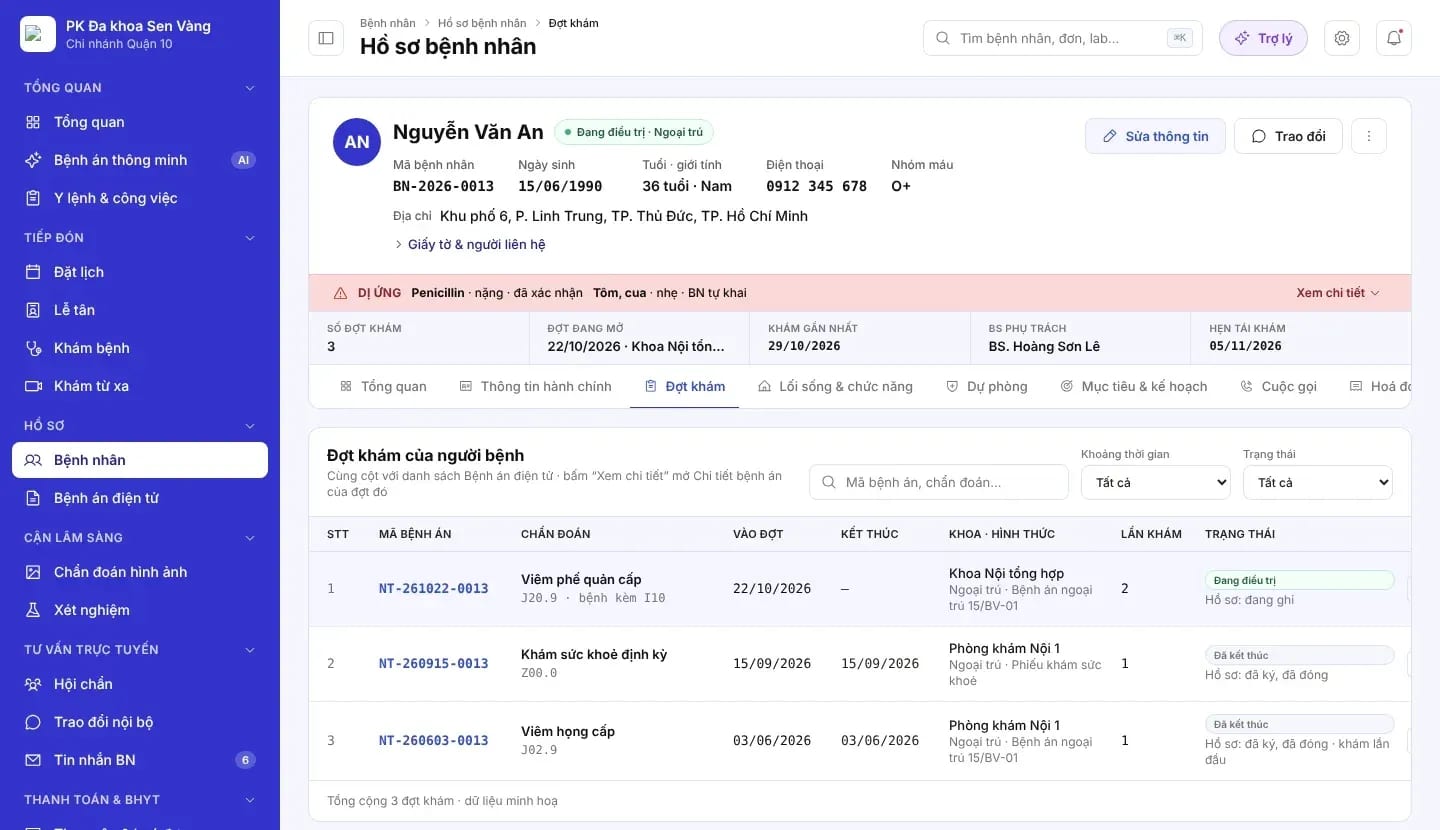
MedAgents clinic portal interface
A unified record
Instead of searching through several logbooks and software systems, the doctor opens one record and sees the information needed for a clinical decision.
A dedicated patient ID, with quick search by national ID, phone number, or name; contacts and documents gathered in one section.
The allergy alert banner shows severity and the source of the record, and sits at the top of every record screen.
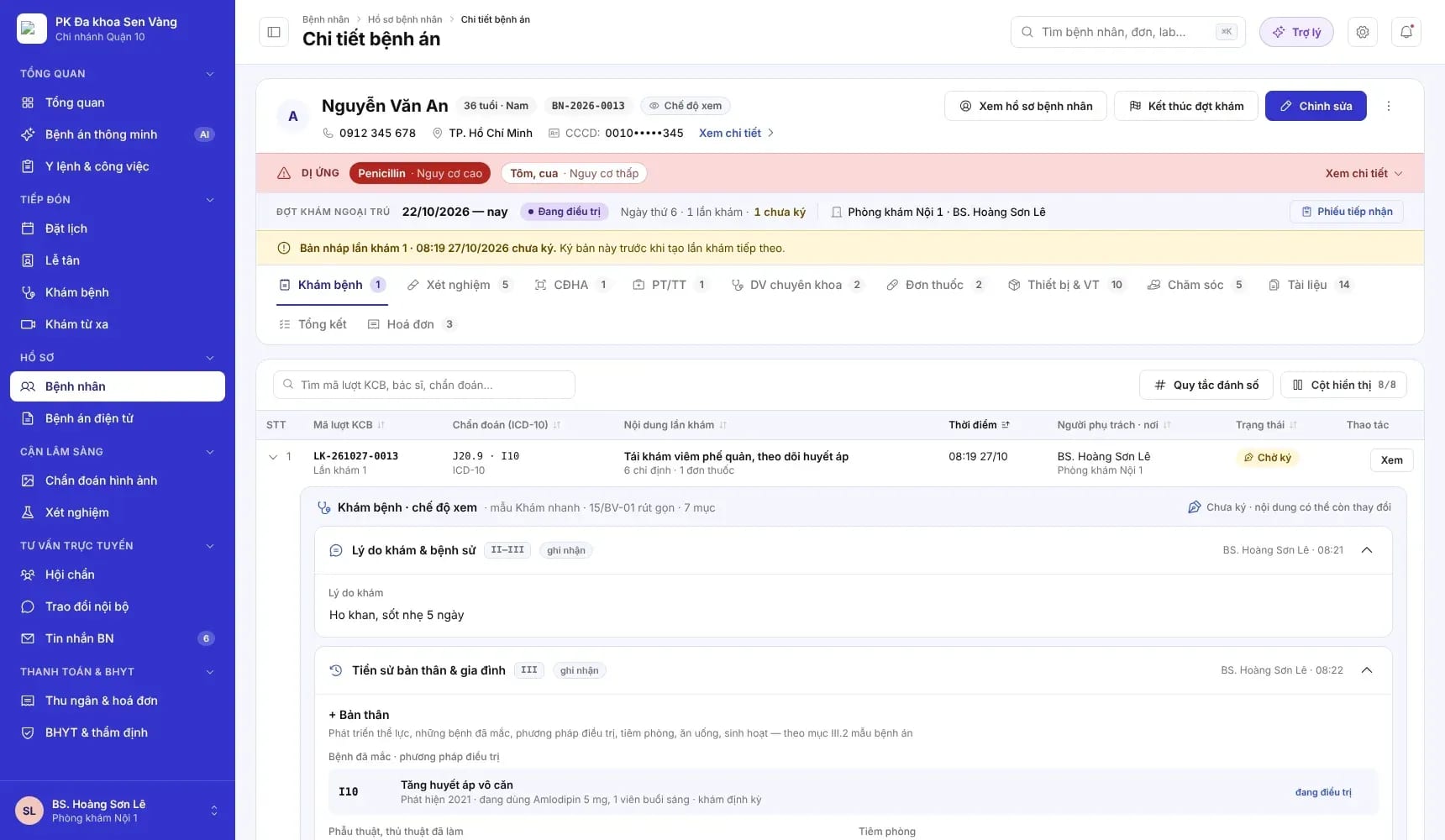
Blood pressure, pulse, temperature, SpO₂, and weight across visits are displayed as tables and charts.
A list of the problems being followed by ICD-10 code along with current medications, updated from each episode of care.
Each episode of care gathers notes, lab tests, imaging, prescriptions, care sheets, and signed documents.
The doctor sets treatment goals, follow-up visits, and preventive reminders; the team tracks them in the same record.
Clinical documentation
Notes for each visit follow the sections of the medical record template, so by the end of the episode of care the record already holds enough content to print, sign, and archive.
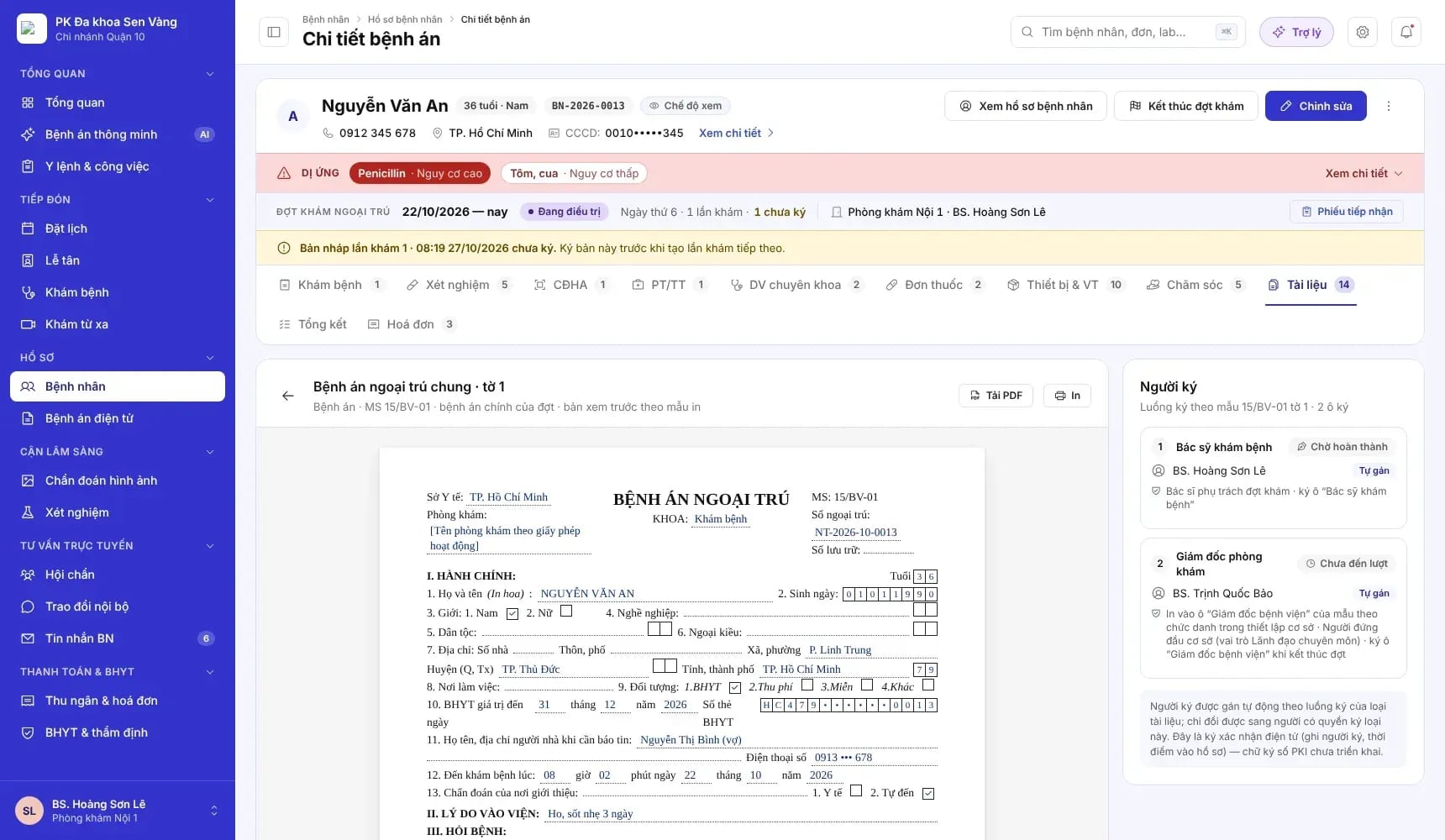
Forms & signatures
Recorded data is populated into forms that follow Ministry of Health form codes. Signatories are assigned by role to each signature field on the form.
Regulatory compliance
MedAgents designs forms, data structures and signing flows that follow current regulations, so facilities can roll out electronic medical records (EMR) and data exchange on schedule.
Medical record templates, certificates, and clinical forms follow the guidance in Official Letter 65/KCB-QLCL&CĐT: 32 medical record templates and 80 certificate and form templates.
Replaces Circular 46/2018/TT-BYT. Hospitals must complete this before September 30, 2025; other medical examination and treatment facilities before December 31, 2026. Confirmation is by electronic signature, biometrics, or other lawful means.
Includes the summary tables for medical examination and treatment, medicines, technical services and supplies, diagnostic testing, clinical progress, discharge papers and medical record summaries. Amended and supplemented by subsequent decisions.
Data from periodic health checks and screening visits is digitally signed and synchronized to the Ministry of Health personal health database within 24 hours after the episode of care. Appendix 01 on the data template is replaced under Decision 2062/QĐ-BYT.
This text is summarized for introduction and does not replace the original document. The scope that applies at each facility, such as health insurance (BHYT) billing or synchronization of health check-up data, is confirmed during the implementation discovery session.
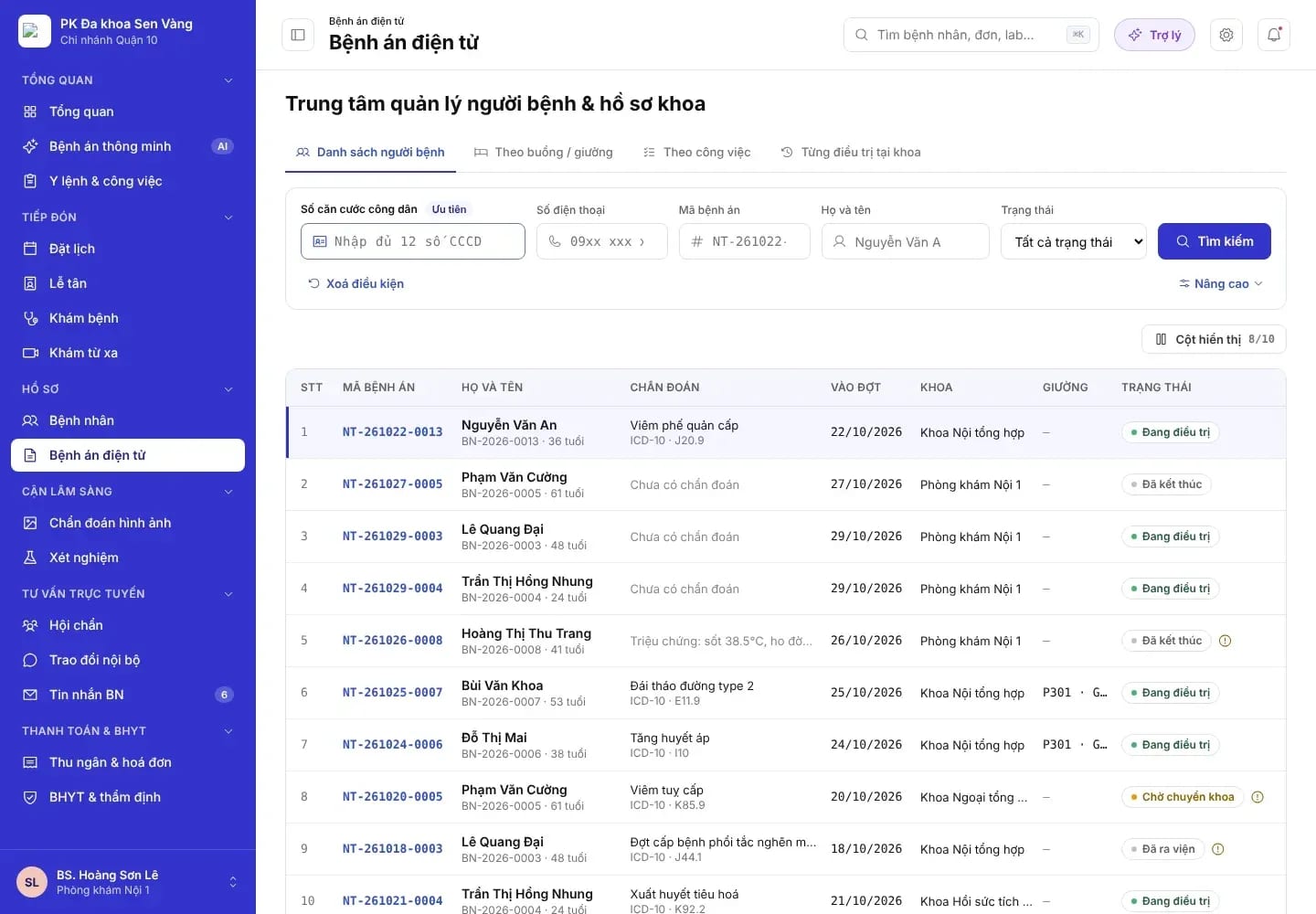
Lookup & management
The front desk and doctors look up the same patient register, according to the permissions granted for each site.
Data security
Patient records are sensitive data. MedAgents complies with HIPAA, information system security from level 3 upward, and the personal data protection regulations currently in force in Vietnam.
Doctors, nurses, and front desk staff see only the part of the record their work requires.
Every view, edit, and signature is recorded so it can be checked later.
The citizen ID number and the contact phone number are partially masked on screen.
AI summary suggestions are saved to the record only when the doctor confirms them.
FAQ
Under Circular 13/2025/TT-BYT, medical examination and treatment facilities other than hospitals are to complete implementation before 31/12/2026. Each facility should refer to the original document and to Department of Health guidance to determine its own roadmap.
Yes. Forms are built to Ministry of Health form codes; doctors can preview, download a PDF, or print directly from the recorded data.
The facility provides the export data structure and the coding rules currently in use. Both sides confirm the fields to migrate and how duplicate records will be reconciled before import.
Decision 1551/QĐ-BYT requires data from periodic health examinations and screenings to be synchronized to the Ministry of Health's Personal Health Database. The connection to the facility's account is configured during implementation.
The facility chooses what is shared with patients, such as results, prescriptions, and follow-up appointments. AI content sent to patients always carries the notice: “This information is for reference only and does not replace advice from a doctor.”
Share the workflows and forms the facility uses today, and MedAgents will propose an implementation path in line with regulations.