

A 90-day rollout framework: from discovery session to pilot review
A reference timeline for agreeing on scope, testing, and evaluating one workflow. Actual timing depends on the data and the integrations.
MedAgents uses Medplum/FHIR R4. Integration still requires data mapping, access rights, and testing with the receiving system.
Follow new articles via RSS
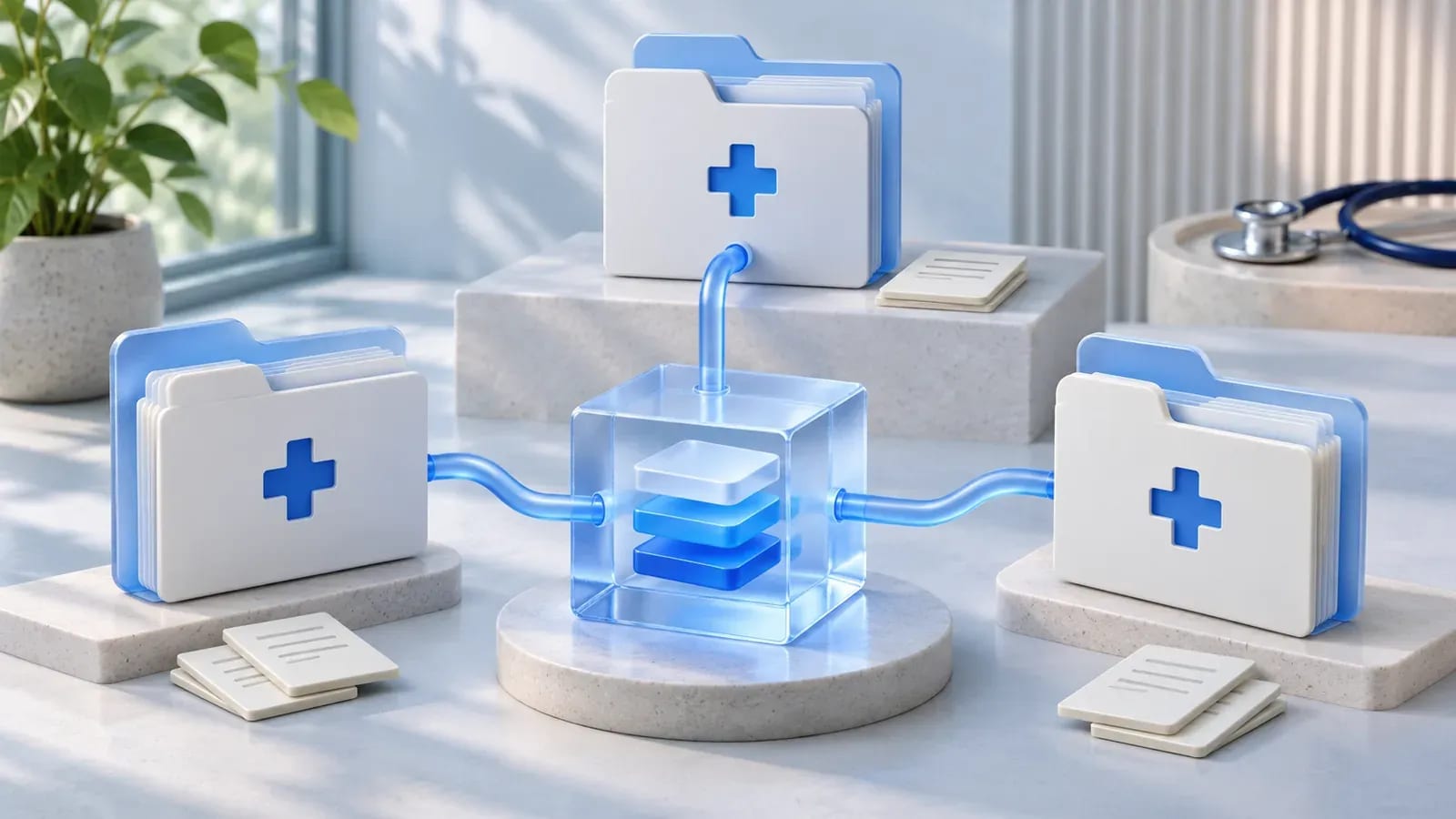
MedAgents organizes data on Medplum and FHIR R4. Patient records, visits, results, and prescriptions can be represented using the corresponding resource types. This is the basis for building data connections and reconciliation.
The two systems still need to agree on patient identifiers, code lists, units, required fields, and how updates are made. The connection also depends on APIs, access rights, and the capabilities of the receiving system. Using FHIR does not mean interoperability with every HIS, LIS, PACS, or national system.
Before implementation, the parties should agree on the data types to be exported, the formats, the attached documents, the permissions required, and how the handover package will be verified. A server backup is not automatically a dataset that another system can use right away.
See Data and integration and Patient records to prepare the list of data to reconcile.
KEEP EXPLORING
A reference timeline for agreeing on scope, testing, and evaluating one workflow. Actual timing depends on the data and the integrations.
The AI workspace supports question answering, summaries, and draft notes from the sources selected; the scope of data processing must be defined at implementation.
Separates initial configuration, ongoing operations, and support; clarifies the data scope, the connections, and how acceptance is carried out.